Australia’s New Red-Light Camera Upgrade – Australia’s newly upgraded AI-powered red-light camera system is set to bring major changes to how traffic violations are monitored and enforced across the country. With advanced automation, improved accuracy, and immediate penalty processing, the technology aims to reduce dangerous driving behaviour and increase safety at busy intersections. This nationwide upgrade reflects Australia’s growing commitment to road safety and the use of artificial intelligence to support law enforcement. Drivers can expect faster detection, fewer false readings, and a more consistent enforcement experience as the system becomes fully operational later this year.
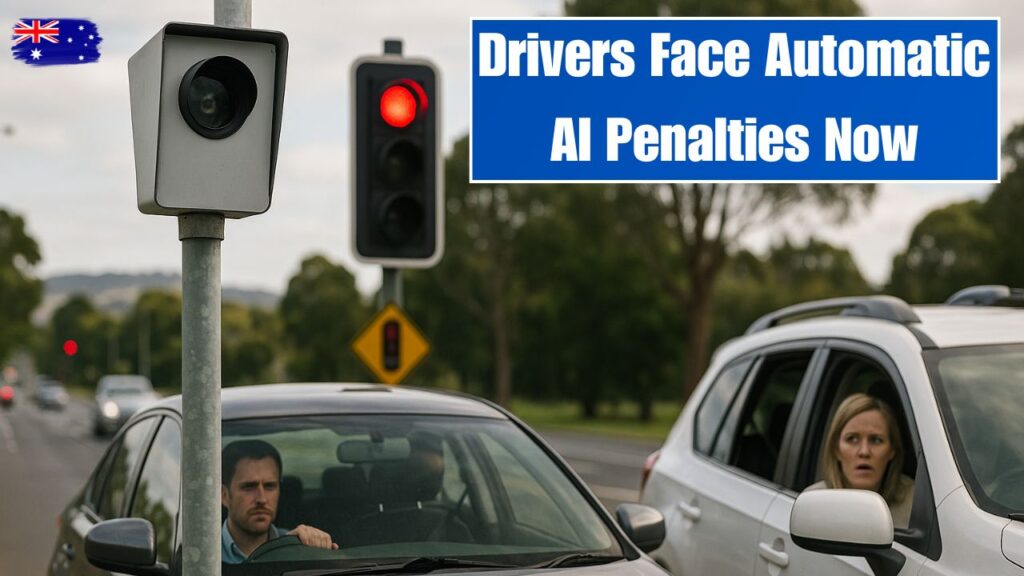
AI Traffic Camera Enforcement for Australian Citizens
The introduction of AI traffic camera enforcement marks a significant shift for Australian citizens who rely on safe and efficient road networks. This upgraded system uses real-time image recognition to instantly identify red-light violations, helping authorities reduce accidents caused by reckless driving. Compared to older camera models, the latest AI-based units offer sharper detection capabilities and improved precision even in low-light or high-traffic conditions. For residents across the nation, this means a more dependable enforcement process and enhanced safety at major intersections. Authorities expect the system to encourage responsible driving habits and reduce the number of fatal road incidents in the coming years.
 Australia Confirms New Pension Age From 10 December 2025: Seniors Warned to Prepare For Major Change
Automated Red-Light Monitoring for Drivers Across Australia
Automated red-light monitoring is becoming a core part of traffic enforcement across Australia as the new AI technology takes full effect. Instead of relying solely on manual reviews, the upgraded system automates the entire process—from detection to penalty issuance—significantly reducing the margin for human error. This new approach ensures that drivers who violate red-light rules are identified quickly and fairly. The adoption of automation also allows law enforcement to focus on broader road safety programs. With more accurate results and reduced administrative delays, Australians can expect streamlined processing and fewer disputes related to incorrect camera readings.
| Feature | Details |
|---|---|
| Technology Used | AI-powered image and motion recognition |
| Implementation Period | Late 2025 rollout across major intersections |
| Primary Goal | Reduce accidents and improve road safety |
| Penalty Processing | Fully automated fine generation |
| Accuracy Improvement | Up to 40% fewer false readings |
Smart Camera Violation Detection for Australians Nationwide
The new smart camera violation detection system is designed to provide Australians nationwide with a safer and more transparent road environment. These cameras use artificial intelligence to analyse frame-by-frame movement and instantly detect when a vehicle crosses the intersection after the light turns red. The upgraded technology adapts to varying weather and lighting, increasing reliability in both urban and rural locations. By offering uniform monitoring standards across different regions, authorities aim to reduce discrepancies in enforcement. This enhanced consistency helps create a fairer system where all drivers are subject to the same level of oversight and accountability.

Intelligent Road Safety Technology for the Canberra Government
Intelligent road safety technology is becoming a central focus for the Canberra government as it invests in infrastructure that leverages artificial intelligence. These upgraded red-light cameras feed data directly into integrated road safety networks, enabling faster decision-making and enhanced monitoring capabilities. With AI providing more accurate detection, government agencies can track patterns, evaluate high-risk intersections, and implement targeted safety improvements. This technology also reduces the administrative workload on human officers, allowing resources to be redirected to active road patrols or community safety initiatives. As the system expands, it is expected to form a key pillar of Australia’s long-term road safety strategy.
Frequently Asked Questions (FAQs)

1. How do AI red-light cameras work?
They use image recognition and motion analysis to detect vehicles crossing after the signal turns red.
2. When will the new camera system be active?
The rollout is expected to continue through late 2025 across major intersections.
3. Will penalties be issued automatically?
Yes, the upgraded system automatically generates fines once a violation is confirmed.
4. Are AI cameras more accurate than older models?
Yes, they significantly reduce false readings and improve detection reliability.